Reaching out, breaking ground
29 September 2026 / Lister News Lister Institute Fellows

29 September 2026 / Lister News Lister Institute Fellows
Highlights from the Lister Institute Annual Fellows Meeting 2026
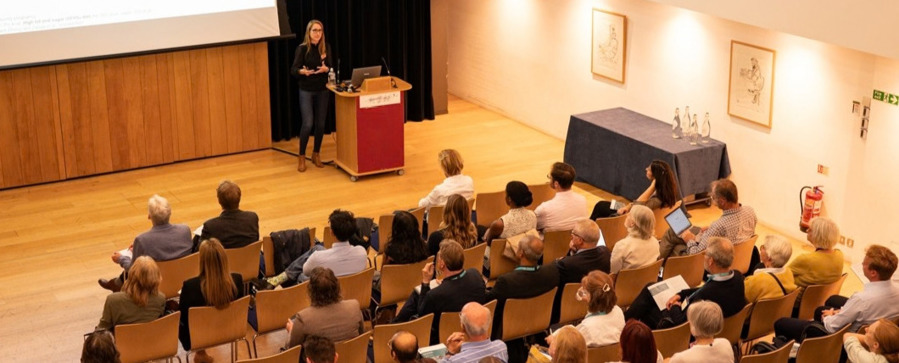 Over 100 current and former Fellows, Members, guests and Lister Summer Studentship participants gathered earlier this month for our 41st Annual Fellows Meeting. It is a unique meeting of minds from across biomedical disciplines where new ideas spark, collaborations emerge and lifelong friendships form.
Professor Sir John Iredale, Chair of the Lister Institute, paid tribute to Dame Bridget Ogilvie, the Institute’s former chair, who passed away earlier this year. John repeated her guiding philosophy: “Our job is not to guard a legacy. Our job is to put money in the hands of young researchers.” That principle – unrestricted funding given early for genuinely original and bold ideas – ran through two days of excellent science spanning geographies, diseases, and molecular mechanisms.
This year we launched an initiative to widen our reach across the island of Ireland. Trustee Julian Blow and Scientific Committee chair Anne Rosser have spent the past year reviewing the research landscape in Ireland; they now lead our new initiative to mentor rising stars in the Republic of Ireland and nurture high quality Lister Prize applications.

Decoding blood–brain barrier asymmetry in schizophrenia: from mechanisms to human relevance
It was wonderful to welcome Dr Chris Greene, one of our Lister Prize 2026 winners, who is based at RCSI University of Medicine and Health Sciences in Dublin, though he was quick to contrast the Lister’s reach with his own personal story: “If you mapped my personal footprint, it would cover about ten square kilometres in Dublin,” he quipped, explaining he only went to university thanks to dedicated support for underrepresented groups to enter higher education. Today, Chris’s research asks whether the barrier that regulates what can move between blood and brain behaves differently on the left and right sides of the head. Building on prior work showing that regulating the barrier’s claudin-5 protein can prevent seizures in mice, Chris has now found that barrier breakdown in retired contact-sport athletes is puzzlingly asymmetric, favouring the left hemisphere and tracking closely with language and word-finding difficulties. His Lister Prize will help him to explore whether the same lateralised pattern appears in schizophrenia – and how this might inform new treatments.

Dissecting the epistasis of innate immune signalling evolution using a serendipitous genetic tool
Dr Mark Hanson, at the University of Exeter, wants to extend the reach of new research tools. Thanks to his comparative work across many Drosophila (fruit fly) species he has demonstrated that fruit flies’ antimicrobial peptide genes evolve in lockstep with a species’ ecological niche; some specific variants of these peptides are uniquely evolved to defend against specific bacterial pathogens. Now, thanks to a chance discovery of a balancer chromosome in Drosophila testacea, Mark wants to build a dual Drosophila genetic toolkit to understand how immunity recognises infection differently between species. His work will uncover the subtle evolutionary mechanisms that lead to large differences in the immune response. “I’m planning to build Drosophila testacea into a versatile genetic tool for the wider research community,” he outlined. “There are an immense number of possibilities that a dual Drosophila melanogaster and Drosophila testacea genetic toolkit opens up. Down the line, I intend to build a stock centre that makes the UK and the University of Exeter the destination for using this new research tool, while enabling the global community to advance evolutionary approaches in biomedicine.”
Further highlights:

Dr Aran Singanayagam (Imperial College London) showed how depleting the lung’s own microbiome can switch on an exaggerated antiviral response in the airways, helping to explain why some people with chronic obstructive pulmonary disease (COPD) suffer severe viral flare-ups while others do not. He will use his Lister Prize to investigate how manipulation of commensal fungal species may help restore neutrophil responses in people with COPD. Singanayagam Lab.

Dr Janin Lautenschläger’s studies how the protein alpha-synuclein forms reversible condensates at the synapse, and the role of the vesicle protein VAMP2 in this process. She has found that several disease-linked gene variants disrupt the condensate process before irreversible protein aggregation begins: “We think this is important because it will allow us to look at the very early stages of dysfunction, especially in the context of Parkinson’s disease,” she says.
Several of this year’s talks shared a common arc: moving a field from simply observing correlations to proving underlying molecular mechanisms in health and disease.

Defending the Oocyte Genome: Preserving DNA for Decades
Dr Anjali Hinch, at the University of Oxford, studies why oocytes are uniquely vulnerable to ageing. Formed before birth, oocytes must protect their genome for decades, yet one in four pregnancies miscarry and one in 150 live births carries a maternally-derived genetic disorder. In 2023, her group showed that meiotic break repair is far more mutagenic than previously understood. Anjali will now investigate genomic sites that are unusually vulnerable to age-related damage and infer causes and repair processes in them. “I want to understand the specific mechanisms by which oocytes protect their genome for decades – and why they eventually fail,” she says.

Engineering Embryogenesis: Reconstructing Limb Buds In Vitro
Dr Naomi Moris, a group lead at the Francis Crick Institute, focuses on a little understood period of embryo development between two weeks, after which human embryo research is legally restricted, and six weeks, when donated tissue becomes available. “In this timeframe the embryo looks a bit like a ham sandwich at one point and then it looks a bit like a tadpole,” she explains, “and we have no idea how you go from a ham sandwich to a tadpole.” She has found that her stem cell-derived “gastruloids” and “trunk-like structures” self-organise from scratch in a dish, without any experimenter dictating the pattern beforehand. How is this body patterning determined? Her lab has shown how spontaneous cross-tissue signalling pathways can lead to the emergence of multiple cell types or drive neural tube patterning, for instance. She’s now beginning to add limb bud progenitors to her set of models to further explore how development is regulated as the early body plan forms.
Further highlights:

Dr Girish Ram Mali (University of Oxford) identified and named the protein Shulin (which means “one who controls a trident”) because of the role it plays in clustering dynein motors together, a necessary step that allows them to drive the wave-like motion of cilia. Cilia dysfunction can lead to devastating diseases, for example primary ciliary dyskinesia in which people are highly susceptible to respiratory infections due to build up of airway mucus. Girish plans to use a range of genetically modified cell culture and lung organoid models to further investigate ciliary and dynein motor biology at tissue-scale.

Dr Iva Tchasovnikarova (University of Cambridge) identified a new immune-defence complex, HUSH2, and separately an unexpected regulator of linker histone expression (CRAMP1). Her Lister Prize will support studies into how such novel histone regulators could be targets in cancer therapy, including for B-cell lymphoma.
We welcomed two former Fellows to share updates on their research since their Prize Fellowships recently ended. They both championed how the Prize’s flexibility enabled them to pursue curiosity-driven studies.

Maternal–Placental Dialogue: Mechanisms, Biomarkers and Translational Pathways to Improve Pregnancy Outcomes
Professor Amanda Sferruzzi-Perri (University of Cambridge) studies the placenta. Her Lister Prize, awarded in 2018, arrived when she had no permanent position and was reliant on a patchwork of small grants: “It was really the Lister Institute that believed in me, believed in my ideas, and gave me that five years of funding, which cannot be understated,” she remarked. The funding let her build a programme of work on placental endocrine capacity. Her group found that the foetus uses the imprinted Igf2 gene in the placenta to actively “program” the mother’s metabolism. Without this foetal manipulation, the mother cannot properly partition sugar and lipids; as a result, the placenta fails to transport enough glucose, leading to growth-restricted and hypoglycemic foetuses. “Having five years to build your programme of work gives you that confidence to stick your teeth into questions that maybe you would feel too risky,” she said. Amanda recently won a Wellcome grant as Principal Investigator to investigate mechanisms by which heat affects maternal and offspring mental health.

Controlling the Cytoskeleton to Understand its Functions
Professor Mark Dodding (University of Bristol) works on the molecular motors that ferry cargo along the cell’s internal scaffolding. His talk focused on his discovery and functional characterisation of filamentous actin inside microtubules. But with an eye on the future, he pointed to a shift now under way across structural biology: “It’s becoming really intrinsically possible to design completely new proteins from scratch, using AI and computational modelling. … I think the power that’s going to give us in cell biology is really exciting.” His latest research is using de novo peptide and protein design and synthesis to understand and control cytoskeletal architectures involved in intracellular transport.
More reflections from other recently completed Fellowships in Freedom to follow the science.
Professor Sir Adrian Bird (University of Edinburgh) delivered the Special Lecture on the protein MeCP2, which he and colleagues discovered binds methylated DNA and, when mutated, causes Rett syndrome, a severe, X-linked neurodevelopmental disorder. For years, the assumption was that damage done during brain development could not be undone. But his team’s 2007 Science paper proved otherwise: reactivating a dormant Mecp2 gene in adult mice reversed the disorder’s most advanced symptoms. As he put it: “This is a protein that is required for neuromaintenance rather than neurodevelopment. You can make a brain perfectly well without this protein – what you can’t do is maintain it.” That single finding now underpins ongoing human gene-therapy trials.
Sharing recent work, Adrian’s lecture went beyond the story of Rett syndrome, highlighting recent studies on SALL4, a protein that binds AT-rich DNA using a weak zinc finger. His broader argument, tying MeCP2 and SALL4 together, is that molecular biologists have focused mostly on discrete genetic “switches” but his work suggests that a great deal of gene regulation instead works through a diffuse, frequency-dependent signal spread across whole genes. “Our job as scientists is to try to falsify our favourite hypothesis,” he reminded the room. “Not everybody seems to remember that all the time, but that’s actually what we’re supposed to do.”
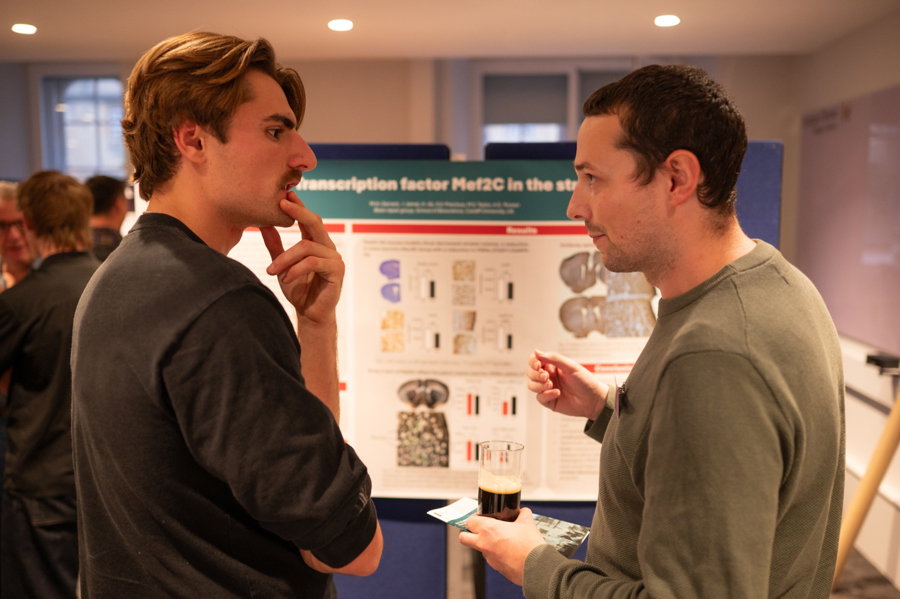
As always, curiosity and community were at the meeting’s core, best evidenced during the evening poster session where 22 undergraduates presented research posters from their Summer Studentships hosted in current and former Lister Fellows’ labs. The scheme gives students an opportunity to experience lab life and learn a wide range of research techniques and tools. Lister Fellows say that the connections and conversations that coalesce around posters and over refreshments are just as valuable as the Lister Prize fund itself – and what makes the interdisciplinary and cross-generational nature of the Lister community so unique.
Closing the meeting, John thanked Anne and the Scientific Committee for their outstanding work reviewing 125 applications to select this year’s eight Lister Prize Fellows. With the Joseph Lister’s 200th birthday anniversary in April 2027 and the Ireland initiative gathering pace, there is plenty more to look out for.