In conversation with Mark Hanson
21 October 2026 / Blog Lister Institute Fellows

21 October 2026 / Blog Lister Institute Fellows

Dr Mark Hanson is a 2026 Lister Prize Fellow and an evolutionary biologist based at the University of Exeter’s Penryn Campus in Cornwall, where he studies why closely related species respond so differently to the same infections.
We caught up with Mark to learn about his journey into immunology, the discovery that is reshaping how we think about the innate immune system, and what the Lister Prize will let him build next.
Q: What first drew you into the world of infection and immunity?
A: My entry point was my masters at the University of Victoria with Professor Steve Perlman, who studies symbiosis between insects and internal symbionts. I found it fascinating that a fruit fly and Spiroplasma bacteria had a defensive symbiosis protecting the fly against a nematode parasite, and that project led me into the immune genes of that fly. A cascade of events took me to Switzerland, to work on the core Drosophila immune system with Professor Bruno Lemaître for my PhD and postdoc, training in genetics, immunity and host-pathogen interactions, particularly antimicrobial peptides. From there I moved to the UK, where I now study the innate immune differences that determine how related species respond to infection.
Q: Why does the innate immune system deserve more attention than it usually gets?
A: When you study the history of immunity you first learn about vaccines and antigen-antibody specificity. You don’t necessarily realise the innate immune response – your first line of defence – has only really been understood as a major component since the 1980s and 1990s. But it comes first: a lot of the time when you are infected, innate immunity has already failed, which is why you recruit the adaptive response. To prevent infection prophylactically, you need an innate immune system that stops it taking hold at all. My work studies innate immunity because these genetic factors give a binary yes/no answer as to whether an infection becomes problematic.
Q: Your research overturned decades of thinking about antimicrobial peptides. What did you find?
A: The field long assumed these peptides were generalist and redundant: they killed many kinds of microbes in a petri dish, and the body produces so many that no pathogen could evolve resistance. Using Drosophila genetics, we deleted all the canonical antimicrobial peptides to produce the first animal model missing its entire peptide response. That confirmed how important these genes are overall, but strikingly, certain pathogens were controlled not by the generic response but by single genes: delete every peptide but one, and the fly survives like wild type; delete that one, and it dies as if it had no immune response at all. This isn’t a one-off. In 2023 we showed diptericin B is specifically evolved to suppress Acetobacter, the bacteria that fruit flies meet in rotting fruit; fruit fly lineages switching to mushroom-feeding, where Acetobacter is absent, stochastically lose that gene. The host immune system is responding to its environment, producing a Swiss Army knife with a tool for everything that matters.
Q: How will the Lister Prize let you build an entirely new toolkit for studying immunity?
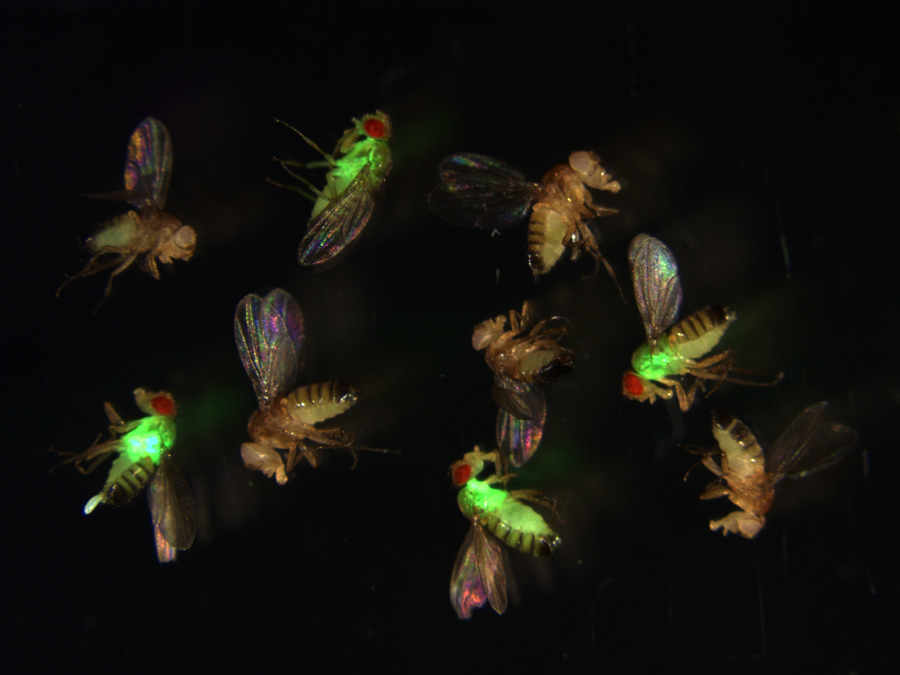
A: My Lister work is a step back from the peptide work, though my lab continues that too. Susceptibility also depends on how a species senses a pathogen and switches on its response, and we usually assume that if the same genes are present across species, information flows through the pathway the same way. That isn’t true: some fly species give a black-or-white response like the classic model, Drosophila melanogaster, while others give a much greyer response using exactly the same genes. To dissect that, I will use a recently discovered and naturally occurring genetic tool called a balancer chromosome found in a different species, Drosophila testacea. Balancer chromosomes are genetic tools otherwise unique to D. melanogaster, which let you lock a mutation into the genome safely within a matter of weeks. That opens the door to developing a parallel toolkit in D. testacea, creating a dual-Drosophila system adaptable to almost any biomedical question. We’ll ship the plasmids to any researcher wanting to build their own D. testacea tools, because success in making this toolkit impactful will depend on recruiting the wider research community.
Championing fairer scientific publishing
Alongside his research, Hanson has built what he calls “a secret second life” as an advocate for reform in academic publishing. Concerned that researchers, funders and the public rarely discuss how science is communicated and paid for, he co-authored a major study quantifying the pressures created by the rapid growth of for-profit, pay-to-publish journals. The strain on scientific publishing shows that the volume of published articles has grown far faster than the number of practising scientists, while some commercial publishers maintain profit margins well above those of major technology companies. Hanson argues that funders are best placed to correct this, by mandating open, non-profit routes to publication such as preprints and society-run journals. He continues to raise awareness through talks, workshops and consultations with academic bodies.
Find out more on The Strain on Scientific Publishing website
Q: How did it feel when you found out you’d won the prize, and what does it mean to be based in Cornwall?
A: I’d spent six hours on the train to London for the interview and six hours back, all in one day, just thinking, “I hope that went all right.” When I got the phone call it was a huge relief, because I realised I could actually do this thing I’d been thinking about for years. Being at the Penryn campus, even further out than Exeter itself, means you travel less, though we’re so well connected that I can collaborate broadly without leaving Cornwall. What’s really valuable about joining the Lister community is interacting with core immunologists again, and bringing a useful perspective from the opposite side: working from a system with no antigens or antibodies that still accomplishes a competent defence against infection.
Q: What are you most looking forward to about the Lister community?
A: Just meeting everyone and having these conversations in a core immunology field. These are fellow Lister Fellows who have done exciting things, so I’m looking forward to hearing about it from the people themselves, and building my network.
Find out more
Mark's researcher profile at the University of Exeter
Discover the Hanson Insect-Pathogen Lab


