In conversation with Fränze Progatzky
14 April 2026 / Blog Lister Institute Fellows

14 April 2026 / Blog Lister Institute Fellows

Dr Fränze Progatzky is a 2025 Lister Prize Fellow and Group Leader at the Kennedy Institute of Rheumatology, University of Oxford. She studies how peripheral glia in barrier organs such as the gut, skin and lung sense change and orchestrate immune and repair responses.
We chatted to Fränze about her pioneering multidisciplinary research and her desire to build an inclusive lab where everyone is valued.
Q: You describe glia as the “sentinel cells”. What makes these cells so fascinating for you?
A: I trained as an immunologist using zebrafish to watch immune cells move in living tissues. During my PhD I became fascinated by barrier organs like the gut – places that constantly decide what to let in and what to keep out. I kept seeing changes in gut motility and started reading about the enteric nervous system, which has an enormous number of neurons – hence the ‘second brain’. What really struck me was the glia. Outside the brain we knew very little about them. In the gut, they form a dense network that you can easily miss in thin tissue sections viewed under a microscope, so we use a range of 3D techniques, including whole-tissue optical clearing and imaging, to visualise the entire network. And once you see that architecture, it’s obvious they’re positioned like sentinels. That curiosity pulled me across from a purely immune-centred view to the crosstalk between glia, immunity and tissue state.
Q: So what have you learned so far about how glia’s multitasking capabilities?
A: In our work we showed that glia don’t simply “support neurons”: they change state in tissue stress and infection, produce chemokines and recruit immune cells to where they’re needed. That’s helpful acutely, but it needs to switch off, too. We think if glia remain in a pro-inflammatory state, they can keep pulling immune cells in and drive chronic inflammation even if you pharmacologically suppress the immune system. Building on this, my Lister-funded programme tests a hypothesis that excites me: that distinct glial states may also help terminate inflammation and reset homeostasis for tissue repair. It’s still early days for the repair side, but the science points that way.

Q: You mentioned this work draws from 3D imaging. Can you tell us a bit more about some of the novel methods you are using to uncover your new insights?
A: Two novel methods are really transforming what we can do. First, we use whole-organ, cleared-tissue 3D imaging to map where glial cells sit within tissues. Location is critical for glia: they occupy strategic positions along crypts, glands and the airways, where they act as sentinels. Seeing their full 3D architecture allows us to understand how these networks reorganise during infection and repair.
Second, we combine this spatial information with state-of-the-art single-cell and spatial transcriptomics. Rather than generating every dataset from scratch, we integrate the many high-quality human and mouse datasets that the field has already produced. With dedicated computational expertise in the lab, we can define conserved glial states across tissues and diseases, and then bring the most interesting states back into experimental models to test their function. By linking cellular location with molecular state in this way, we can ask bigger, more clinically relevant questions that would not be possible with any single method alone.
Q: Where could this matter for patients, and what’s realistic to say now?
A: We start from human tissue in conditions like IBD, atopic dermatitis and asthma, where current immune-targeting drugs don’t always deliver durable resolution of inflammation and tissue repair. If we can understand how glia help terminate inflammation and reset tissues, that opens new therapeutic angles – and, potentially, better ways to select treatments for the right patients. There are early indications that glial features could become useful biomarkers of treatment response, but that’s a cautious, long-term line of enquiry.
Q: What is the Lister Prize enabling – scientifically and culturally?
A: Winning the Prize was validating for a line of work that’s new and understudied. Practically, it enables me to add a strong computational component to my lab, making our research more multidisciplinary and integrative. Rather than remaining confined to a single experimental approach within one lab, we can now combine computational analysis with imaging and functional biology, and collaborate more effectively at scale. We’ll use existing human and mouse datasets to build a cross-disease “glial atlas” and connect this to imaging and functional studies.
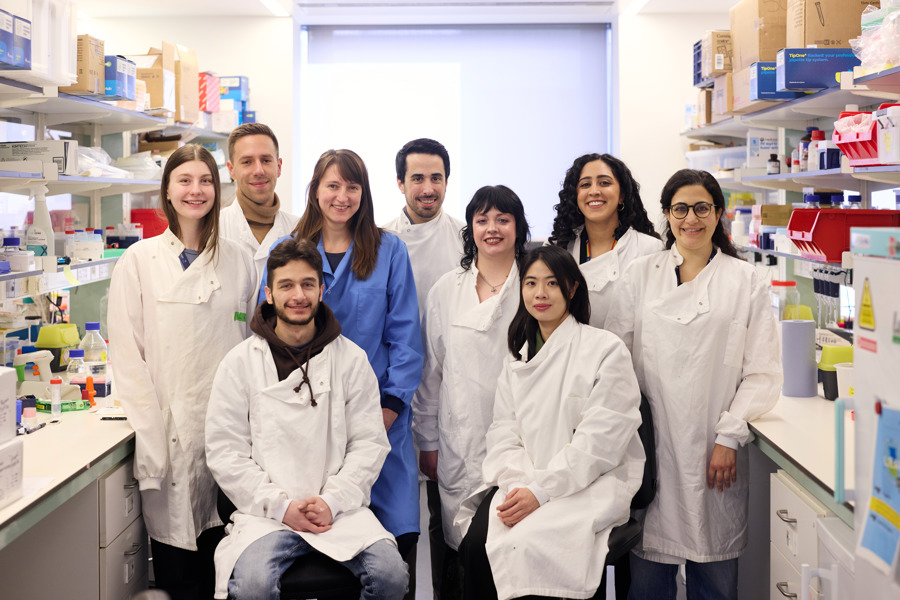
Personally, I care about building an inclusive lab where everyone has a voice and a path to grow – I’m a first-generation scientist, so confidence-building matters to me. The Lister community has already opened doors; the annual meeting was a great place to meet Fellows who think deeply about glia and tissue biology in different contexts, so I’m hoping we can establish some great collaborations and rich discussion with Fellows.
Find out more
Fränze’s researcher profile at The Kennedy Institute of Rheumatology


