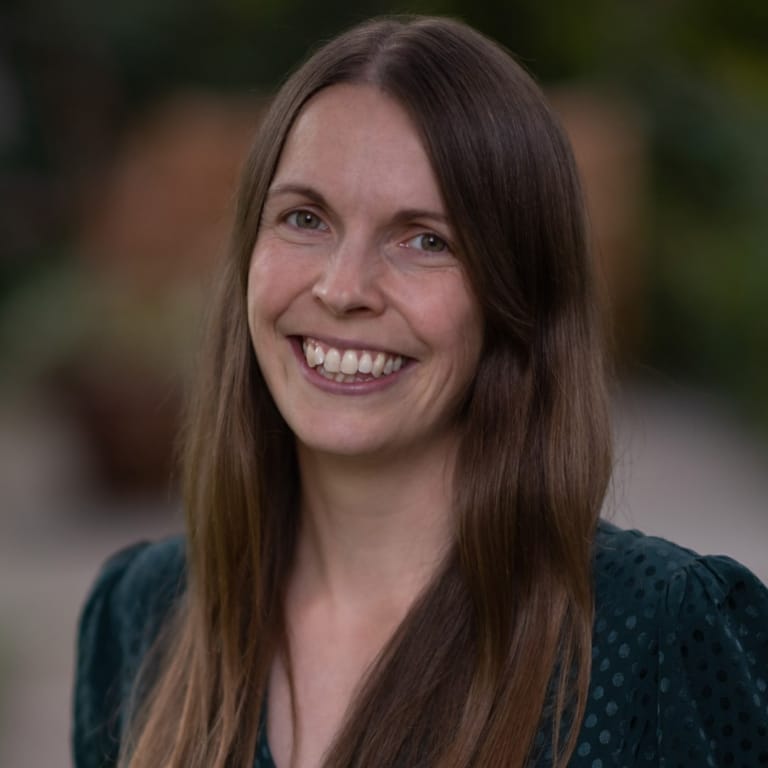

Lister Prize Fellow Yuval Elani is building programmable synthetic cells from the bottom up—combining membrane engineering, biochemistry and abiotic mechanisms to create novel ways to target and deliver therapeutics, for example to hard-to-treat cancers.
In our recent chat, Yuval reveals an ardent passion to deploy the power of synthetic biology to biomedicine.
Q: So, let’s start with the obvious question: what exactly is a synthetic cell?
A: It all comes down to your starting point. If you have a living cell and you re-engineer it, that’s top-down synthetic biology. But if your starting point is something non-living—chemicals, lipids, DNA, enzymes—and you build up complexity, that’s bottom-up synthetic biology.
In our lab, our building blocks are chemicals: lipids, which we synthesise or buy, DNA, enzymes, metabolites—the building blocks of living systems. We manufacture a complex system that mimics many features of living cells. If we make them complex enough, we can start to engineer behaviours we associate with living systems, like moving up concentration gradients, communicating with their neighbours, even generating proteins based on a genetic programme. We build out synthetic cells from raw materials and from scratch by essentially following a recipe.
Q: What drew you away from chemistry and biophysics and into this strange new world of synthetic cellmaking?
A: I very much came into this area via the physical sciences. I did my undergrad in chemistry. My PhD was actually engineering membranes and trying to understand their fundamental biophysical properties. Then slowly, as my career progressed, I got a series of fellowships where I was trying to build membranes with greater complexity. Eventually, these membranes were so complex that you could consider them to be the basis of a potential future synthetic cell. That really captivated me, because it’s a research area that’s very new. People have been re-engineering cells for decades, but building synthetic cells from scratch only took off and came into its own about 10 years ago.
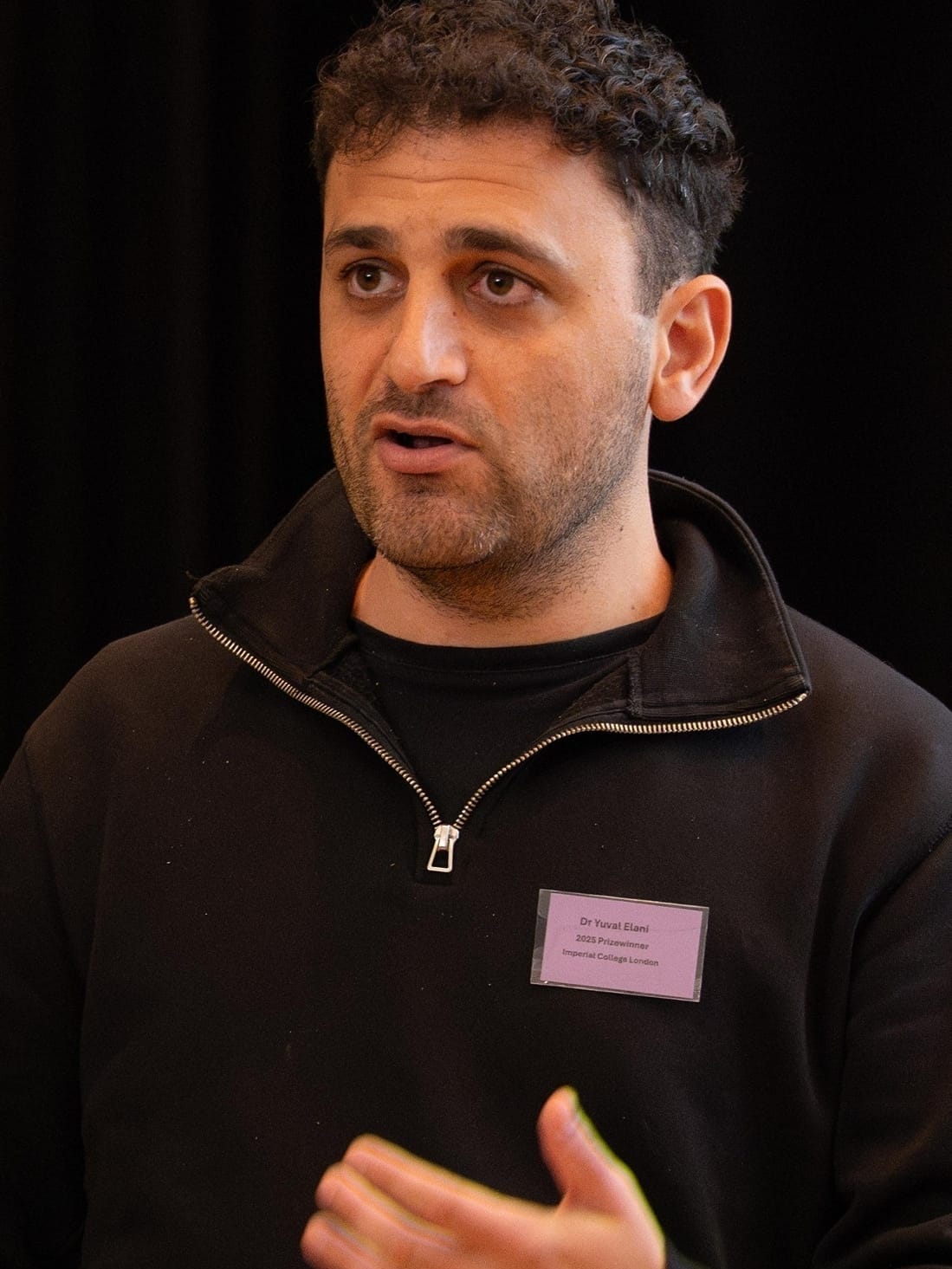
I came in from the membrane side which allowed us to establish our group in this area in the early days. First, we were just trying to understand the engineering fundamentals of biological phenomena. But then I realised that synthetic cells had big potential for applications as engineered devices. My Lister Fellowship is allowing me to really explore the potential applications of synthetic cells for biomedicine.
Q: So tell us about some of your recent discoveries and innovations.
A: A lot of the functionality of synthetic cells is actually derived from the membrane. Many groups have long been interested in building synthetic cells that can swim—moving up concentration gradients. Biology does this with flagella; we, in collaboration with other labs at Imperial, do it differently by engineering the membrane so it reorganises based on biophysical principles. We also design membranes to be stimulus-responsive, so when you hit them with a stimulus, the membrane opens up and releases something, activating a downstream cascade. Programming interesting behaviours into cells using membrane as an engineering substrate (often in conjunction with DNA) is something our lab is obsessed with.
So, we’ve created cells with temperature-programmed protein synthesis using RNA thermometers. They express a pore-forming membrane protein which triggers cargo release—an on-demand route to therapy activation if you like.
One of the beauties of synthetic cells is that you’re not limited to how biology does things—you can incorporate completely abiotic and non-biological mechanisms. So, we’ve used magnetic fields to modulate reactions in situ, and we’re now looking at other methods for deep-tissue, non-invasive activation.
Q: How exactly do you make all these different synthetic cells?
A: One of the key enabling technologies is microfluidics. We design and build devices that allow us to make synthetic cells of different sizes and shapes, and load them with different genetic systems. Microfluidics lets us build membranes with very well-defined sizes and compositions, and also build defined compartments within them—like synthetic nuclei or organelles. As engineers, we want full control of the system, and microfluidics allows us to build the architecture of our cells with precision. That’s how we can exert control in a way that’s very difficult with biological cells.
My Lister Fellowship will take this microfluidics approach to the next level as we integrate automation and robotics. At the moment, we’ve focused on rational design—engineering synthetic cells with precisely specified properties and behaviours. But there’s an alternative: high-throughput experimentation. Now we are designing millions of synthetic cell membranes and picking out the best ones to be used as chassis for our cells. We’re developing methods to enable high-throughput library generation and screening, which might change the game for our synthetic cell and lipid nanoparticle drug delivery work.
Q: Where do you think synthetic cells will be first applied for disease treatment or biomedicine?
A: Living cells can grow, evolve, mutate. They are actually very difficult to programme. Synthetic cells are non-living, so they don’t mutate or infect, and are safer for biomedical applications. And they’re also potentially much cheaper to manufacture than living cell therapies. For example, a CAR-T cell therapy can cost half a million pounds per dose, but a synthetic cell therapy could be somewhere in the order of 10 to 100 pounds.
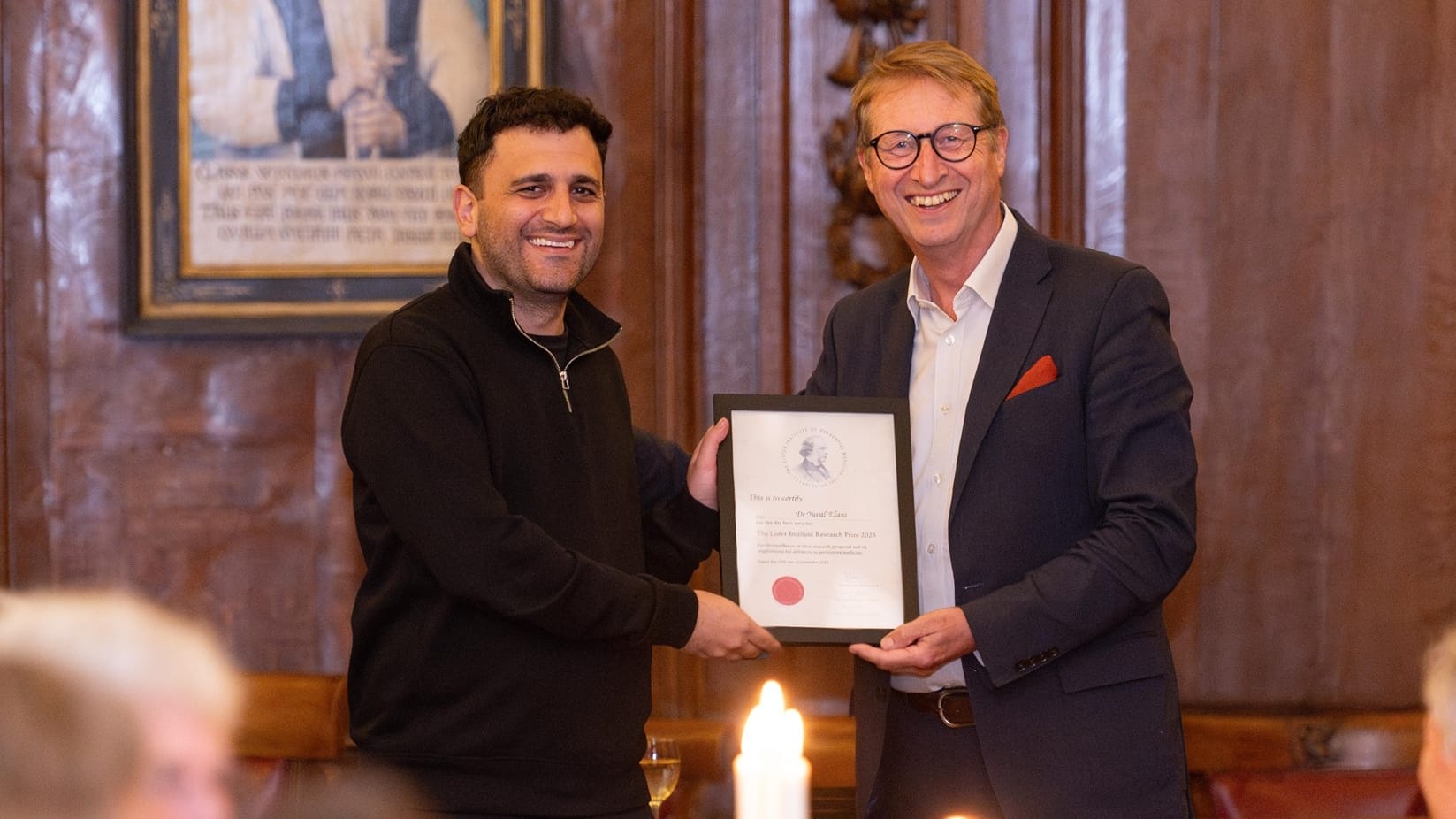
With a fast-moving research area like this one, you just don’t know where the next development is coming from. The Lister Prize gives me the flexibility to pivot and follow the science as it develops.
Q: What excites you most about the future of synthetic cells?
A: I can answer this in two ways: what is the big aim for me, and what is the big aim for the community as a whole. For the community, it’s almost like physicists wanting to study the Big Bang because they want to know how the universe originated. And the big open question is this: can we build a living system from non-living matter? I think it probably is.
But for me personally, the question is much more practical, geared towards specific applications. I really believe that synthetic cells have the potential to unlock some of the bottlenecks associated with engineered living biotechnologies. For our group, the big aim is to build a synthetic cell device that can be used in applications – as therapeutics, in bio-manufacturing, and in bio-sensing. The exciting thing is really starting to make inroads into demonstrating the real-world utility of synthetic cells. That’s what’s driving us.
Find out more
- Yuval’s profile page, Imperial
- The Elani Bioinspired Engineering Group