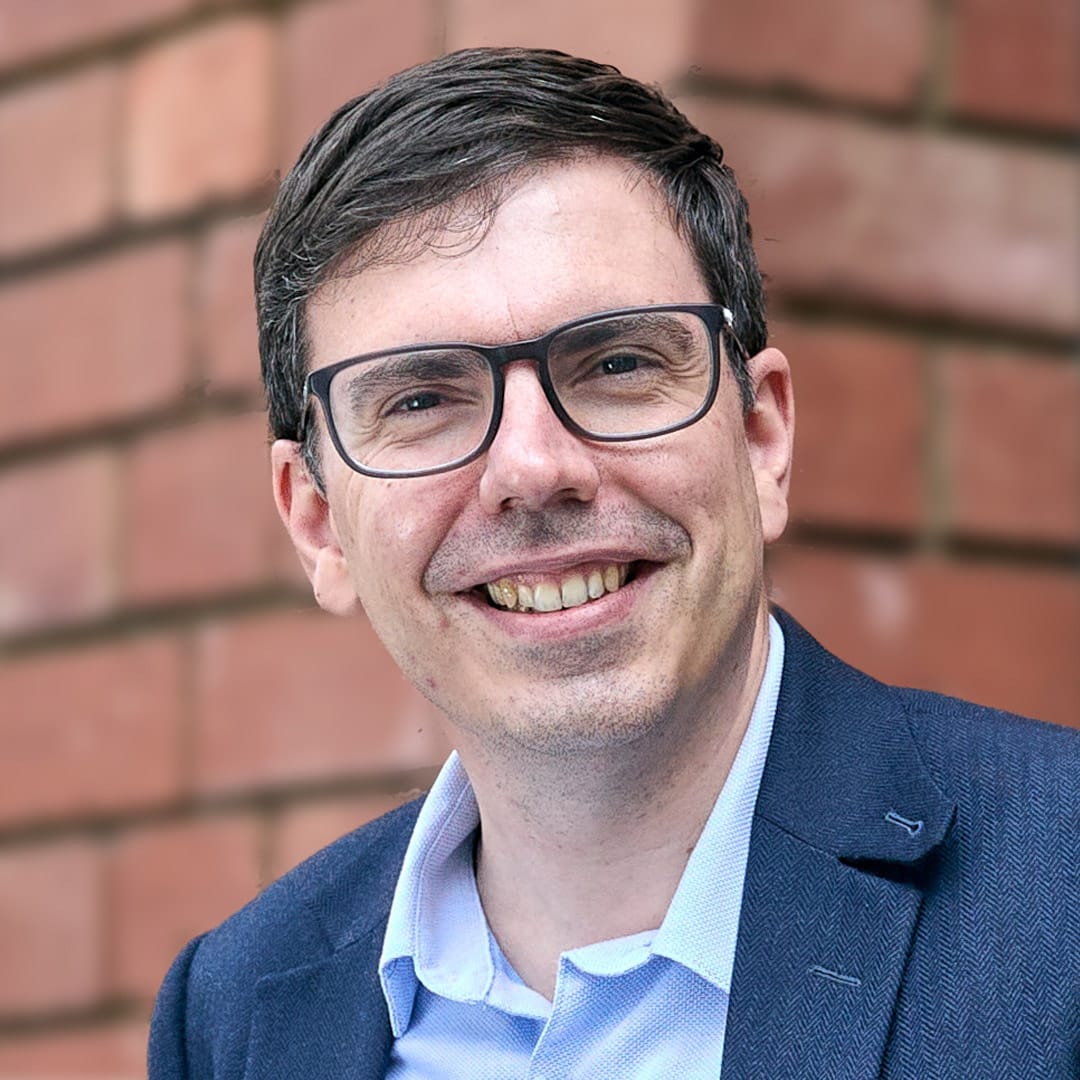
Dr Stephen John Sammut is a clinician-scientist at the Institute of Cancer Research and a consultant breast medical oncologist at the Royal Marsden. His research is transforming our understanding of breast cancer, particularly the aggressive triple negative subtype.
We caught up with Stephen to discuss his journey, his pioneering work on tumour-immune cell co-evolution, and how computational approaches are opening new doors for personalised medicine.
Q: What drew you to cancer research and computational biology?
A: All my science is inspired by my clinical work. As a consultant medical oncologist working in breast cancer, I see first-hand the limitations of our current treatments and the urgency for more precise, less toxic approaches. Those encounters shape the questions I pursue in the laboratory. My patients are the driving force behind my research. The science is a direct extension of what I witness in the clinic.
During my training, I realised that while there is some personalisation in cancer treatment, there’s so much more that could be done. For example, we still can’t predict which patients will respond to a given therapy, so we often use a one-size-fits-many approach in the clinic. I’ve always been fascinated by the idea of “crystal balls”: predicting at the outset who will respond and who won’t, and then tailoring treatment accordingly.
My interest in computational biology started during medical school, when I spent two summers at the Wellcome Sanger Institute in Cambridge, working with leading computational biologists on developing and applying methods for predicting protein structure. That experience hooked me on the power of computational approaches to interrogate biological data, and it’s shaped the trajectory of my science ever since.
My patients are the driving force behind my research. The science is a direct extension of what I witness in the clinic.
Q: How does your clinical experience shape your research questions?
A: Breast cancer is very heterogeneous, with lots of different subtypes. Some have many therapy options, others have very few. Most clinical decisions are based on histopathological assessment and receptor status—oestrogen receptor (ER) and HER2. For ER-positive and HER2-positive tumours, there’s quite a lot of personalisation. But in triple negative breast cancer, which is defined by the lack of these key therapeutic markers, there’s very little personalisation. In early stage, non-metastatic disease, most patients receive six months of intensive chemotherapy and immunotherapy before surgery, but around 40% don’t respond as well and at the time of surgery there is still a significant amount of cancer remaining. That’s a huge unmet need. My clinical experience drives me to ask: can we do better? Can we personalise treatment, so the right person gets the right drug at the right time?
In those patients who are predicted not to respond to treatment, can we identify new therapeutic targets? My early work showed that by profiling the initial cancer biopsy and using machine learning to integrate DNA, RNA and histopathological data, we can predict who will respond to treatment. Now, I’m refining those approaches to develop clinical-grade assays.
Q: Why is triple negative breast cancer such a challenge?
A: Triple negative breast cancer is aggressive and often affects younger women. It’s challenging because it doesn’t have the usual targets for therapy, and the standard approach is intensive chemotherapy and immunotherapy. Yet, a significant proportion of patients don’t respond, and those with residual disease after treatment have a high risk of recurrence within two years. The biology is poorly understood, and there’s an urgent need to rethink how we approach this disease.
Q: What have you discovered about tumour and immune cell co-evolution?
A: Our recent work, published in Nature Immunology, showed that both arms of the adaptive immune system—T cells and B cells—co-evolve with tumour cells at the genomic level. B cells produce antibodies that help defend against cancer, but as breast cancer progresses, the quality of these antibodies decreases. Instead of producing high-affinity antibodies essential for immunological memory, the immune system starts producing less effective ones. This transition is a classic sign of immune failure, and it happens as the tumour and immune system sculpt each other’s fate. We provided genomic evidence for this co-evolution, which helps explain why some patients develop resistance to therapy and poor prognosis. Understanding these mechanisms is critical for developing new ways to restore immune function and improve outcomes.
Q: How are you using machine learning and data integration in your research?
A: We have recently launched the BELIEVE clinical study at the Royal Marsden and the Institute of Cancer Research, which is enrolling women with early-stage breast cancer undergoing pre-operative chemotherapy and immunotherapy. This study provides a unique platform to generate deeply phenotyped, serial tumour samples that is allowing us to interrogate treatment response in real time and understand the biology of resistance at a very high resolution. We are using advanced machine learning methods to integrate multiple layers of data from BELIEVE, including DNA, RNA, 3D cancer imaging, and digital pathology.
By analysing the tumour ecosystem at diagnosis and serially during therapy, we can predict response to therapy and understand the biology of response and resistance to therapy. This research programme builds heavily on our previous published work in Nature, where we showed that the baseline ecosystem can be used to predict outcome. We are now going to start working with Genomics England and the Royal Marsden Cancer Genomic Laboratories to profile tumours using clinical-grade sequencing and analysis, aiming to develop biomarkers that can be used in the clinic. Machine learning frameworks have identified immune activation and composition as critical factors in predicting treatment response, which has shifted our focus to exploring the immune system in greater depth.
Q: What are the biggest hurdles to bringing predictive models into the clinic?
A: Developing a clinically robust biomarker is challenging and requires rigorous validation. We are working very closely with patients diagnosed with cancer to understand how these technologies can be introduced safely and responsibly into clinical pathways. Ultimately, the science must be precise, reproducible, and cost-effective, and any biomarker must demonstrate a consistent association with meaningful outcomes. Inevitably, there are uncertainties, and models that perform well retrospectively may not behave predictably in prospective, real-world settings, but the hope is that we can stratify patients and guide therapy more effectively.
The most important thing is translating discovery science into patient benefit. Understanding the tumour-immune ecosystem is opening new avenues for personalised medicine, and I’m excited to see where the science takes us next.
Q: It sounds like your work relies on a wide range of research methods. How do you foster effective collaboration across different scientific disciplines?
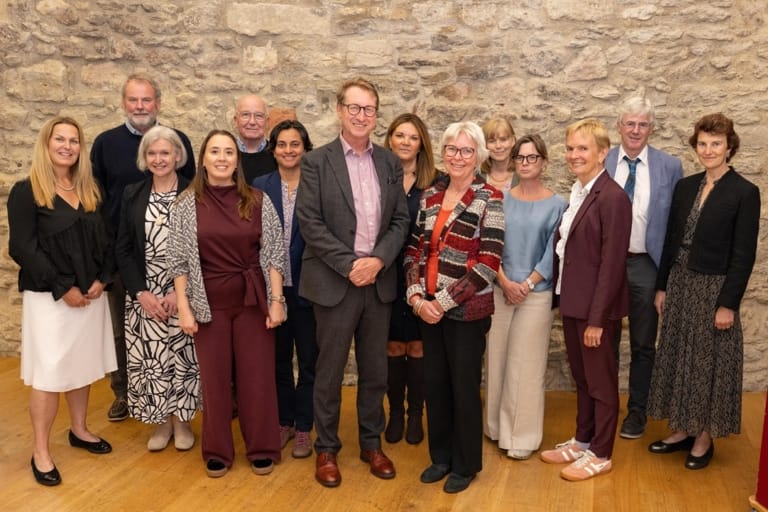
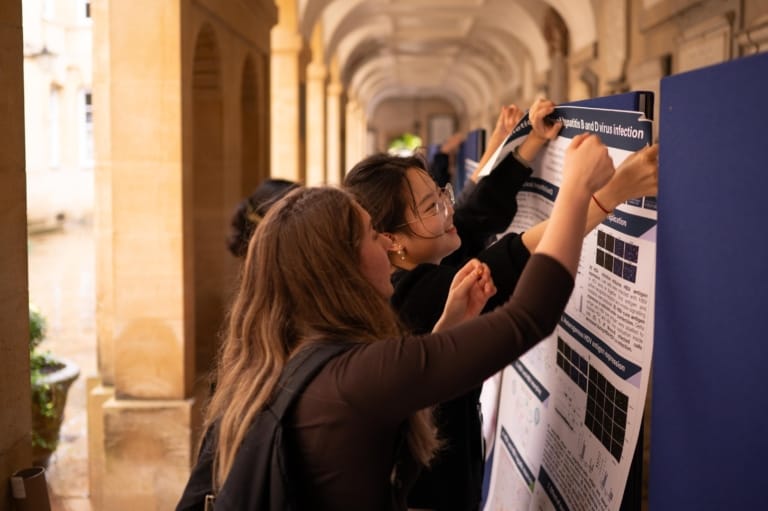
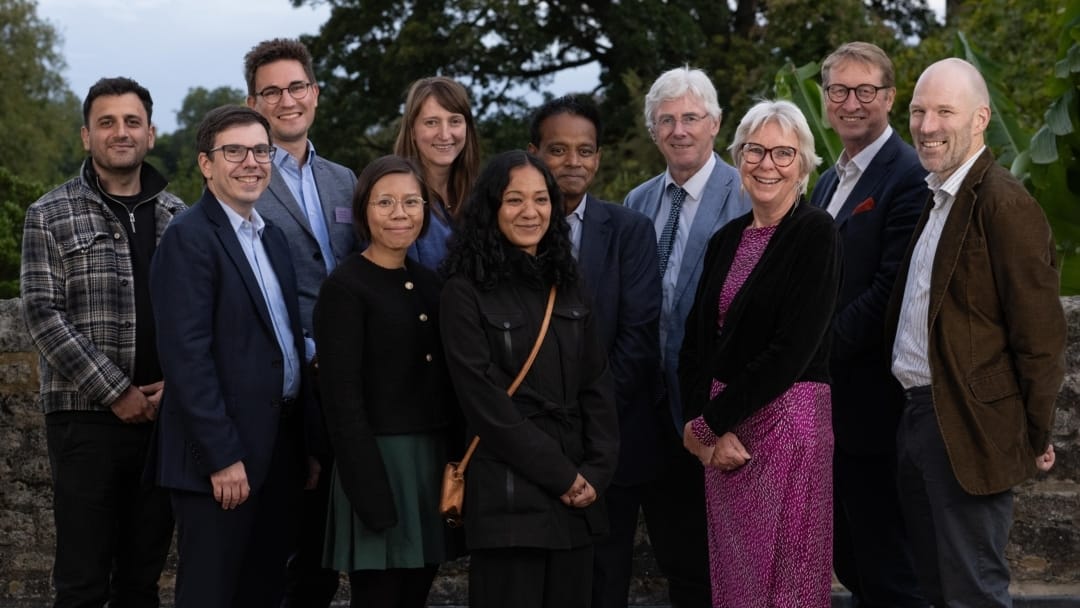
Collaboration is essential. At the Lister annual meeting, I was fascinated by the quality and diversity of the prize winners. Everyone was tackling different problems from different angles, and the science was presented in a highly accessible manner. I found myself thinking about how technologies from other fields could be applied to cancer, and I had conversations that I’m certain will develop into meaningful collaborations. The energy and generosity of the community are inspiring, and I left the meeting feeling energised and full of ideas. So I guess collaboration first starts by being curious about unrelated research and creative about potential overlaps.
Q: With all that science going on, do you ever get a break? What helps you to unwind?
A: It’s almost impossible to walk away from science, but I find great pleasure in cooking, especially trying new techniques and exploring different cultures. Gardening is very therapeutic and relaxing, and it’s often where I get my best ideas. I also enjoy playing chess—the strategy helps me unwind and develop logical thinking, which I apply to grant writing and planning experiments. Science is a lot like chess: you have to think several moves ahead and be ready for the unexpected!
Read more about the Cancer Dynamics Group at The Institute of Cancer Research