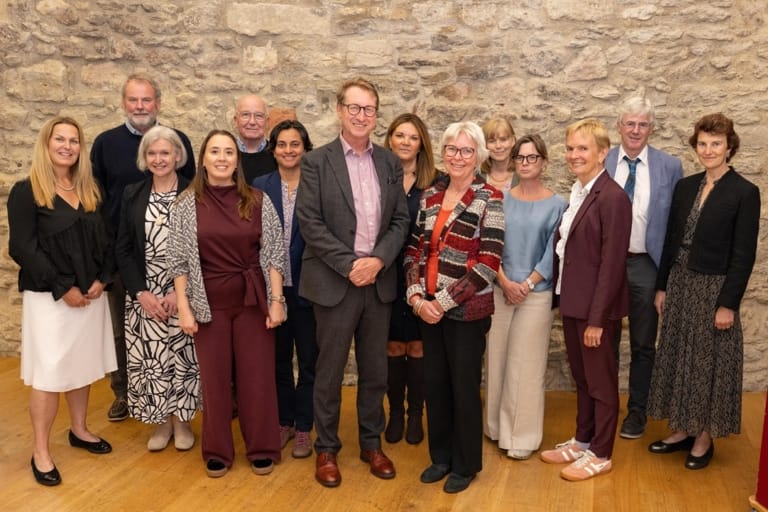
Lister Prize Fellow Dr Srikanth Ramaswamy shares insights from his pioneering work at the interface of neurobiology and AI.

By understanding the first principles of how neuromodulators are organised in mammalian brains, we can develop principles around how to model artificially intelligent systems that will get them closer in their ability to learn like the human brain.”
Dr Srikanth Ramaswamy’s research sits at the cutting edge of computational biology: where neuroscience meets artificial intelligence, an emerging field becoming known as neuro-AI. Combining experimental neuroscience and computational modelling, Srikanth seeks to understand how neuromodulators—histamine, acetylcholine, noradrenaline, dopamine, and serotonin—act on microcircuits in the neocortex to enable higher cognition, learning and memory.
Srikanth builds his models based on known neuroscience, but given the incredible complexity of neuronal connections and the sheer number of neurons in the brain, data remains scarce. By adopting AI, Srikanth hopes to improve modelling and simulations despite the high levels of uncertainty from published experimental studies. And in return, the biology of neuromodulation may help to make AI systems become more ‘brain-like.’
“The premise of my research,” says Srikanth, “is that by understanding the first principles of how neuromodulators are organised in mammalian brains, we can develop principles around how to model artificially intelligent systems that will get them closer in their ability to learn like the human brain.”
Building digital twins: Structure, function and surprising findings
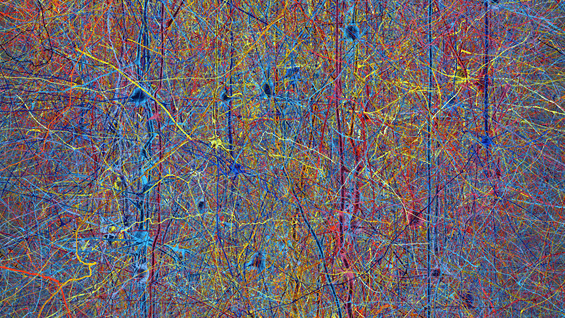
A major focus of Srikanth’s recent research has been the creation of a digital twin of the somatosensory cortex. Unlike most computational models, which often overlook the importance of structure, Srikanth’s team incorporated detailed structural principles, using brain atlases (like a Google map of the brain), to mirror the rodent brain. This approach revealed the critical role of both short-range and long-range axonal projections in shaping emergent network dynamics.
“It’s only by incorporating this structural dimension that one can model the way axons and dendrites are shaped, hence the way they are connected and hence the importance of modulators and their influence on signal propagation,” Srikanth notes. The emergent network dynamics observed in these models serve as proxies for cognitive states, offering new ways to understand how the brain synthesises information.
The work is not just theoretical. Srikanth’s models have translational implications for biomedical research, particularly in understanding neurological disorders. “If we know what receptor types are involved in what neuron type and how disrupted neuromodulatory signalling could trigger the onset of a certain neurological disorder, then we could think of ways to develop drugs that target very specific receptors,” he explains.
Flexibility and resilience
The Lister Prize has played a pivotal role in enabling Srikanth to combine experimental and theoretical science, fostering a multidisciplinary team and culture. “The flexibility is really something that makes the Lister Prize stand out. I can’t think of any other funding mechanism that affords such flexibility for early-career scientists,” he says.
Working at the very forefront of this emerging neuro-AI discipline, Srikanth consciously fosters resilience and creativity in his team. “As an ethnic minority scientist, I know just how important it is to be resilient and not let setbacks or criticism suppress creativity. You really need deep persistence and the resilience to systematically troubleshoot in our field,” he reflects. But, the Lister community offers scope for huge opportunities too. “Being one of the few theoreticians puts me in a very strategic position to build collaborations with people who are strong on the experimental side.”
Neuro-AI in public
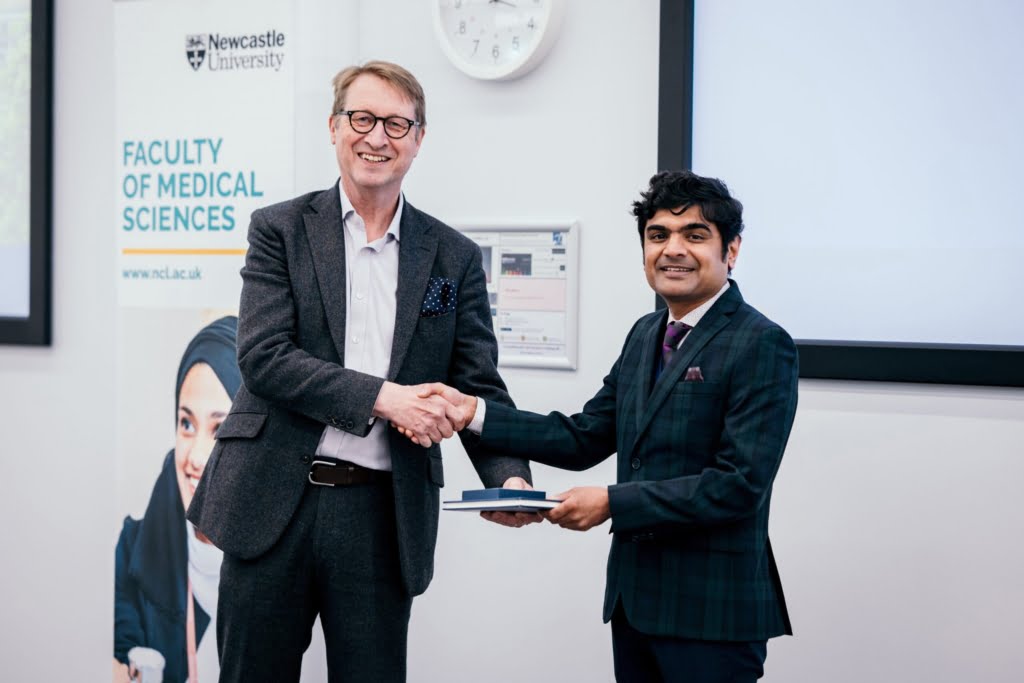
With AI constantly garnering the attention of the mass media and governments alike, unsurprisingly, Srikanth’s work and the story of his neuro-AI journey have featured in popular science publications and outreach. Science communication and public engagement is a “two-way street” which enriches everyone involved.
“It forces you to think about simplifying your work, to step out of your research niche and come up with ways to see your work from a broader perspective,” Srikanth says. “I hope my work helps people—including researchers—be open-minded and to embrace emerging technologies. It is such an exciting place to be right now, you just don’t know what breakthroughs might be just around the corner.”
More about Srikanth and his research
- AI Is Nothing Like a Brain, and That’s OK (Quanta Magazine, 2025)
- Srikanth Ramaswamy and His Journey Into Neuro-AI (Neuronline, 2025)